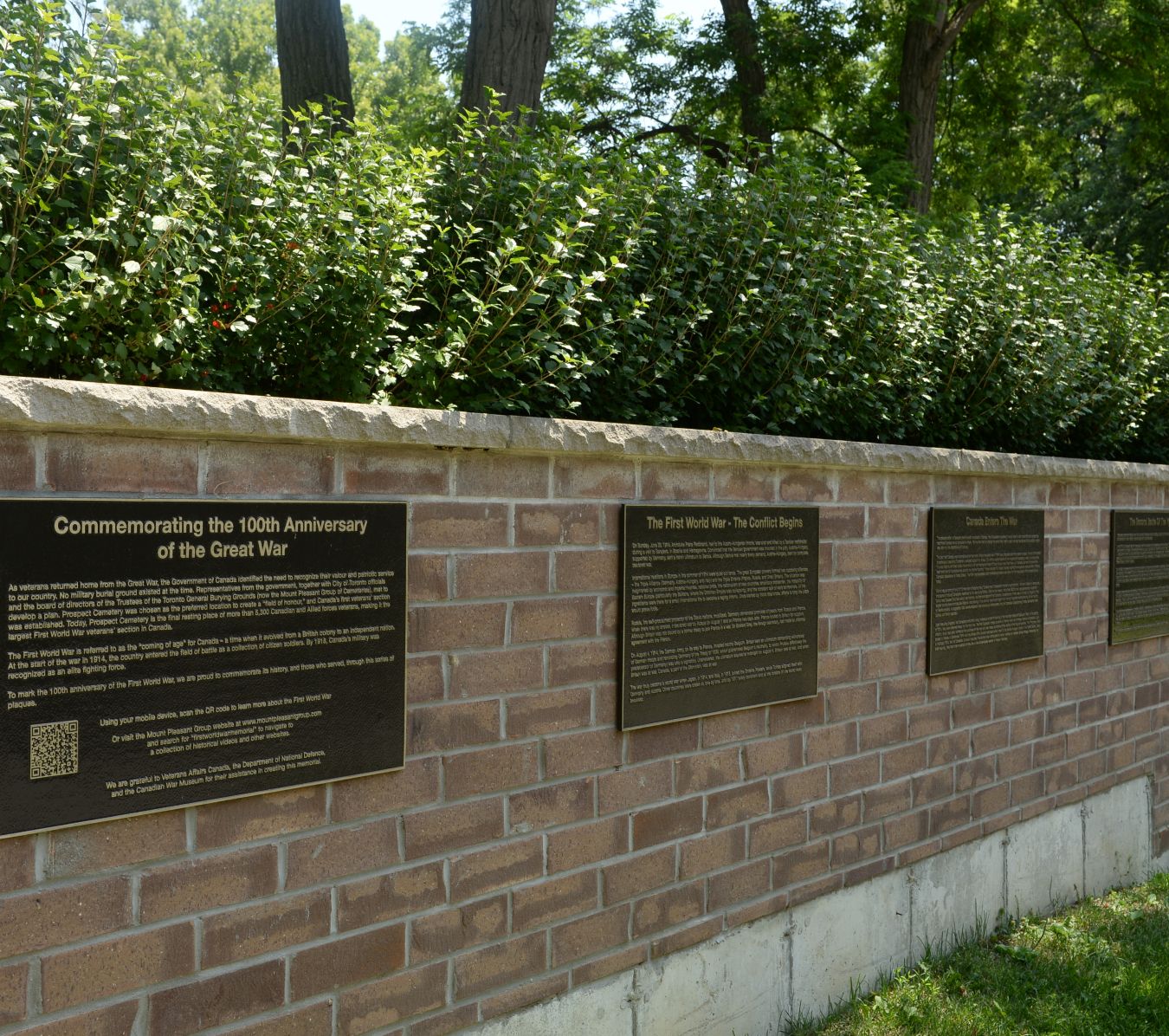
Commemorating the 100th Anniversary of the Great War

The First World War is referred to as the “coming of age” for Canada – a time when it evolved from a British colony to an independent nation. At the start of the war in 1914, the country entered the field of battle as a collection of citizen soldiers. By 1918, Canada’s military was recognized as an elite fighting force as can be seen in the following short documentary film (our thanks to Victor Taboika for granting permission to use this film).

Prospect Cemetery and The Great War
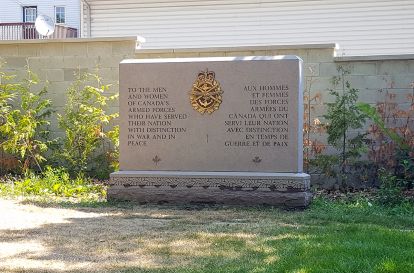
veterans plaque at Prospect

As veterans returned home from the Great War, the Government of Canada identified the need to recognise their valour and patriotic service to our country. No military burial ground existed at the time. Representatives from the government, together with City of Toronto officials and the board of directors of the Trustees of the Toronto General Burying Grounds (now the Mount Pleasant Group of Cemeteries), met to develop a plan. Prospect Cemetery was chosen as the preferred location to create a “field of honour,” and Canada’s first veterans’ section was established. Today, Prospect Cemetery is the final resting place of more than 5,300 Canadian and Allied forces veterans, making it the largest First World War veterans’ section in Canada.

Canada and the First World War: Key Canadian Battles

To mark the 100th anniversary of the First World War, we are proud to commemorate its history, and those who served, through a series of plaques located in the Veterans' section at Prospect Cemetery. 
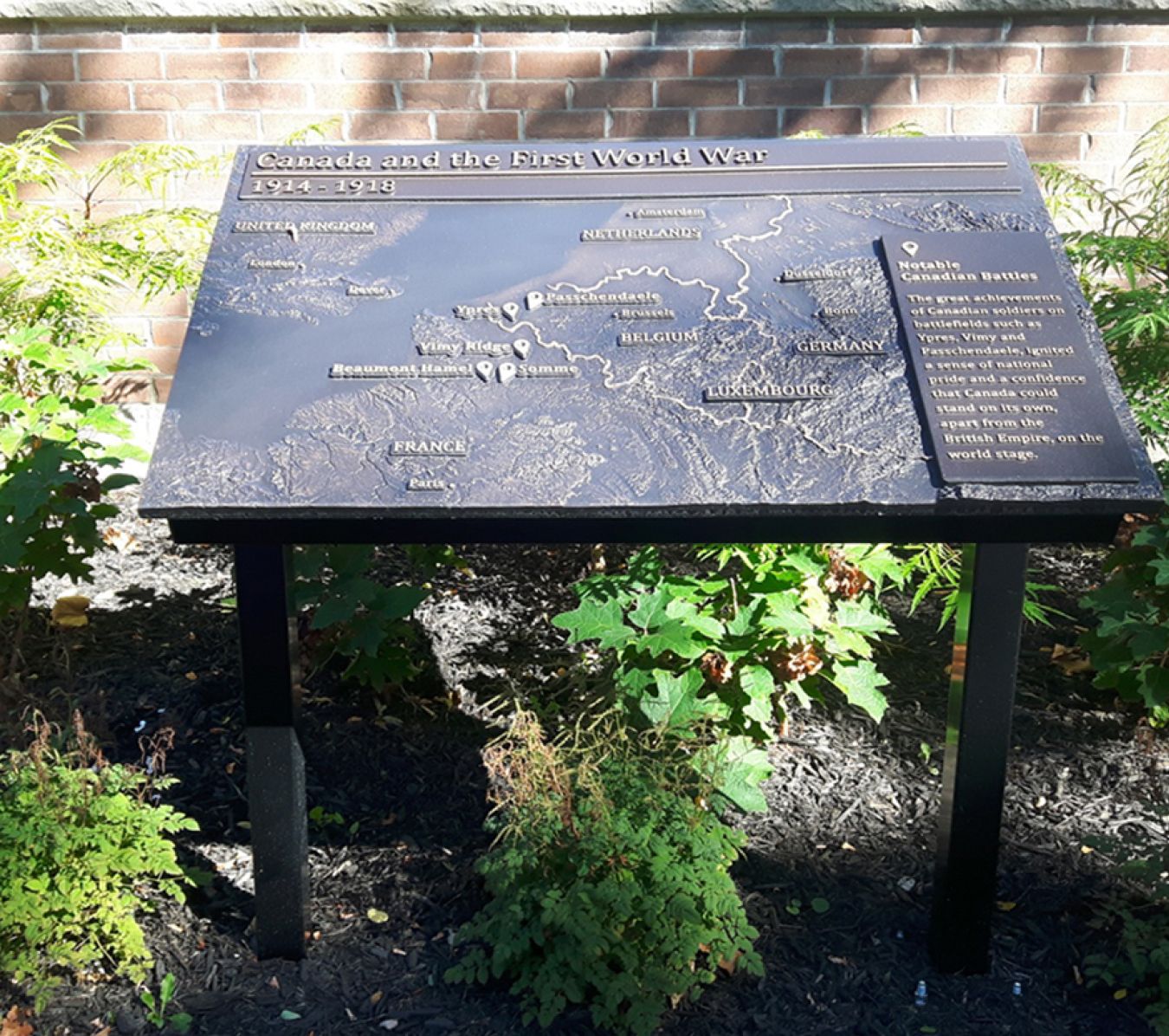
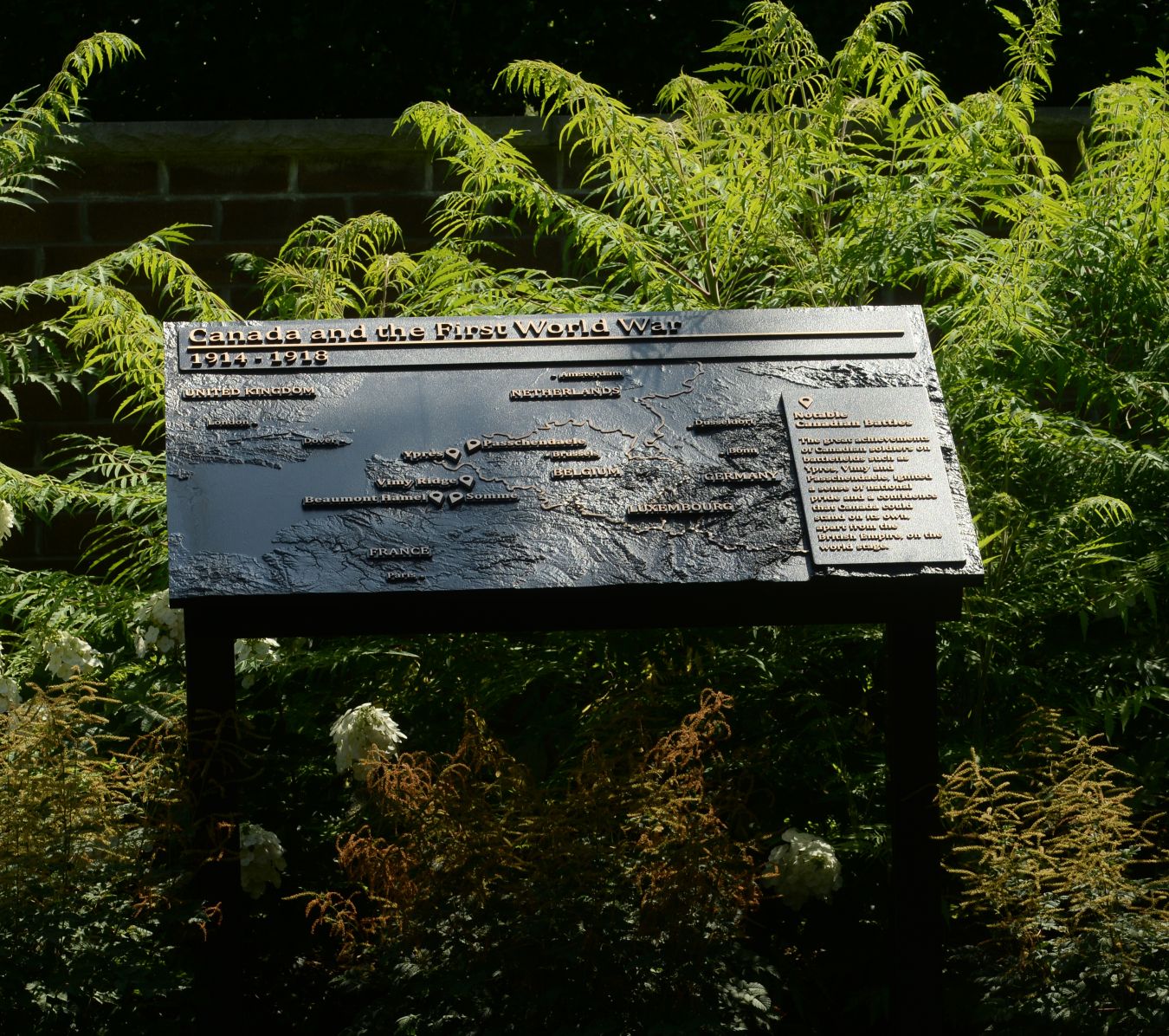
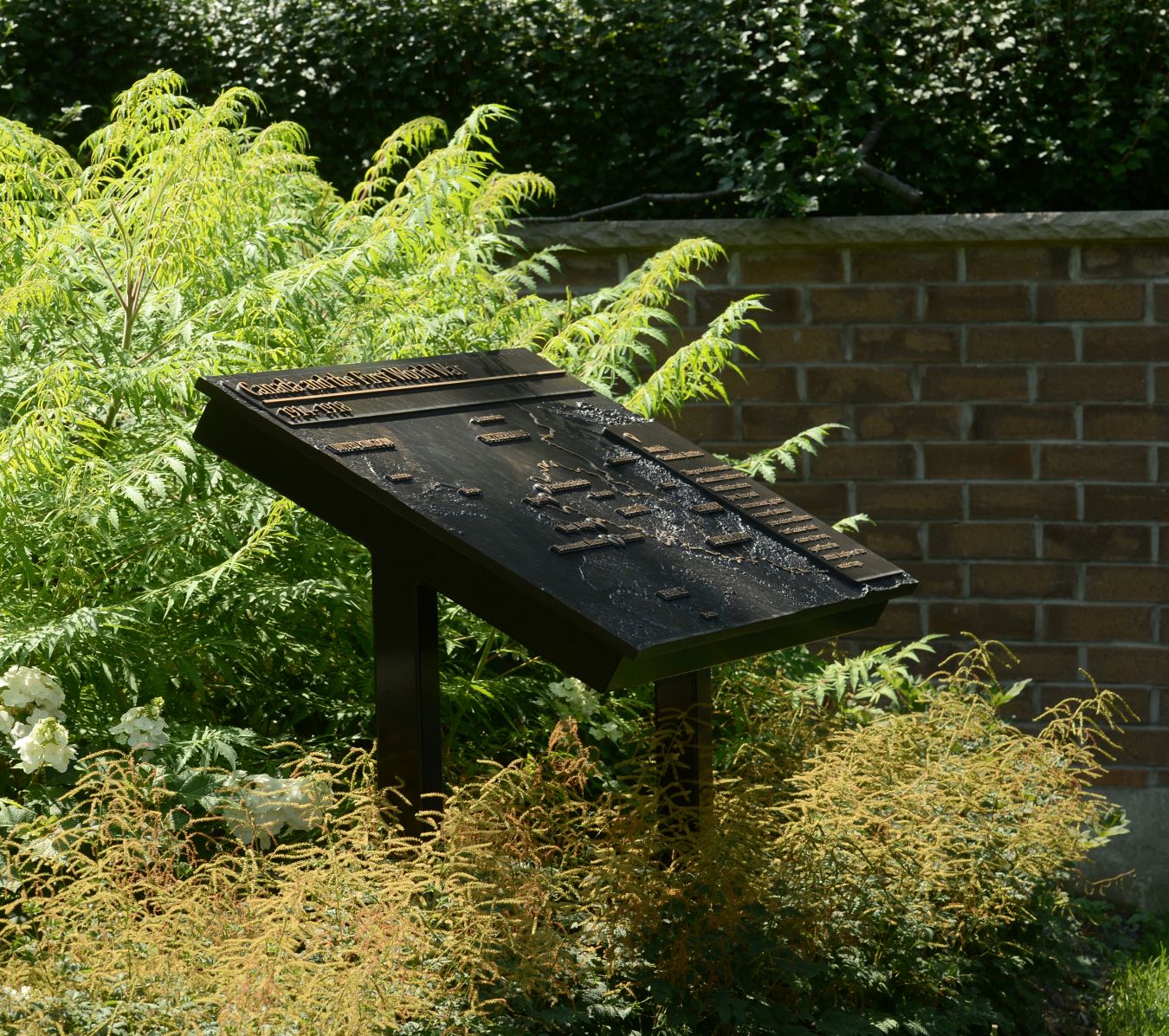
plaque of world war one map
Canadian WWI Battles

Canada's presence in the First World War had a significant impact on the outcome of the war.  As a result of the achievements of Canadian soldiers on the battlefields of Ypres, Vimy and Passchendaele Canada earned its place on the world stage.

World War I Commemorative Plaques with trees at Prospect
The Conflict Begins

On June 28, 1914, Archduke Franz Ferdinand, heir to the Austro-Hungarian throne, was shot and killed by a Serbian nationalist during a visit to Sarajevo, in Bosnia and Herzegovina.

plaque of world war one map
Canada Enters the War

The assassination in Sarajevo went almost unnoticed in Canada. Few Canadians expected it would lead to war; fewer still anticipated the sacrifices Canada would be called to make. 

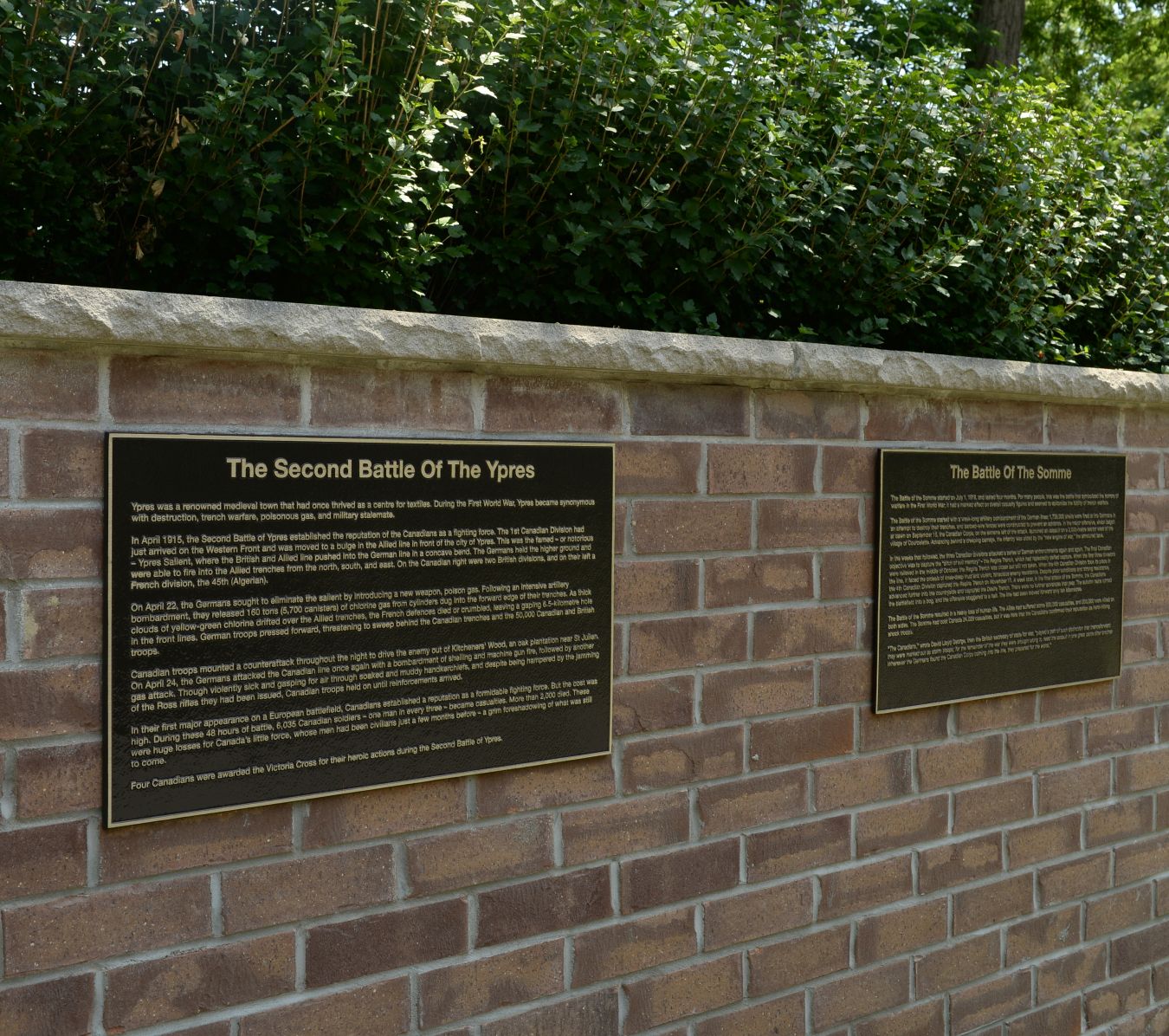
plaque of the second battle of ypres
The Second Battle Of Ypres

In April 1915, the Second Battle of Ypres established the reputation of the Canadians as a fighting force.

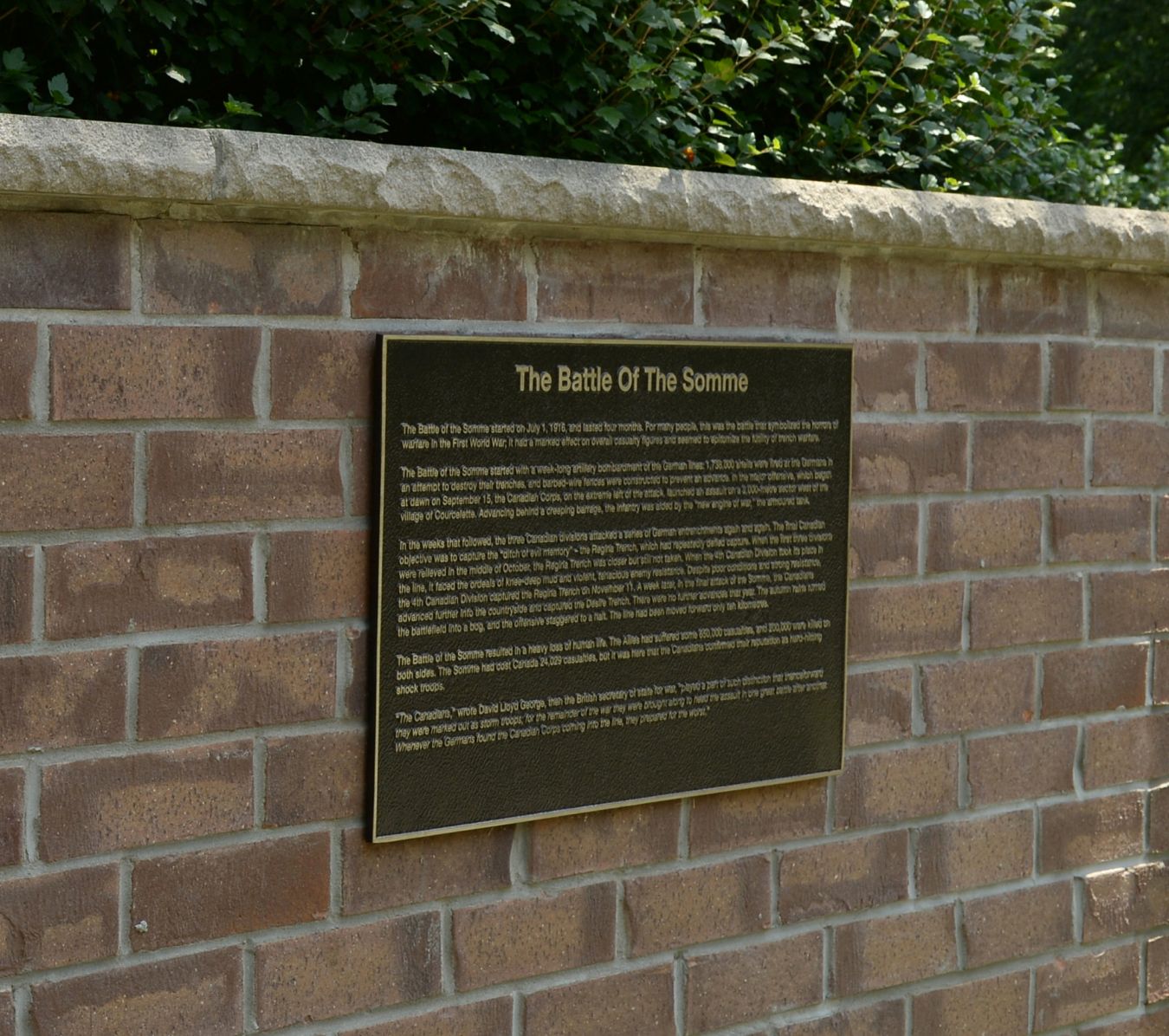
plaque of battle of the somme
The Battle of Somme

The Battle of the Somme started on July 1, 1916, and lasted four months. For many people, this was the battle that symbolized the horrors of warfare in the First World War.

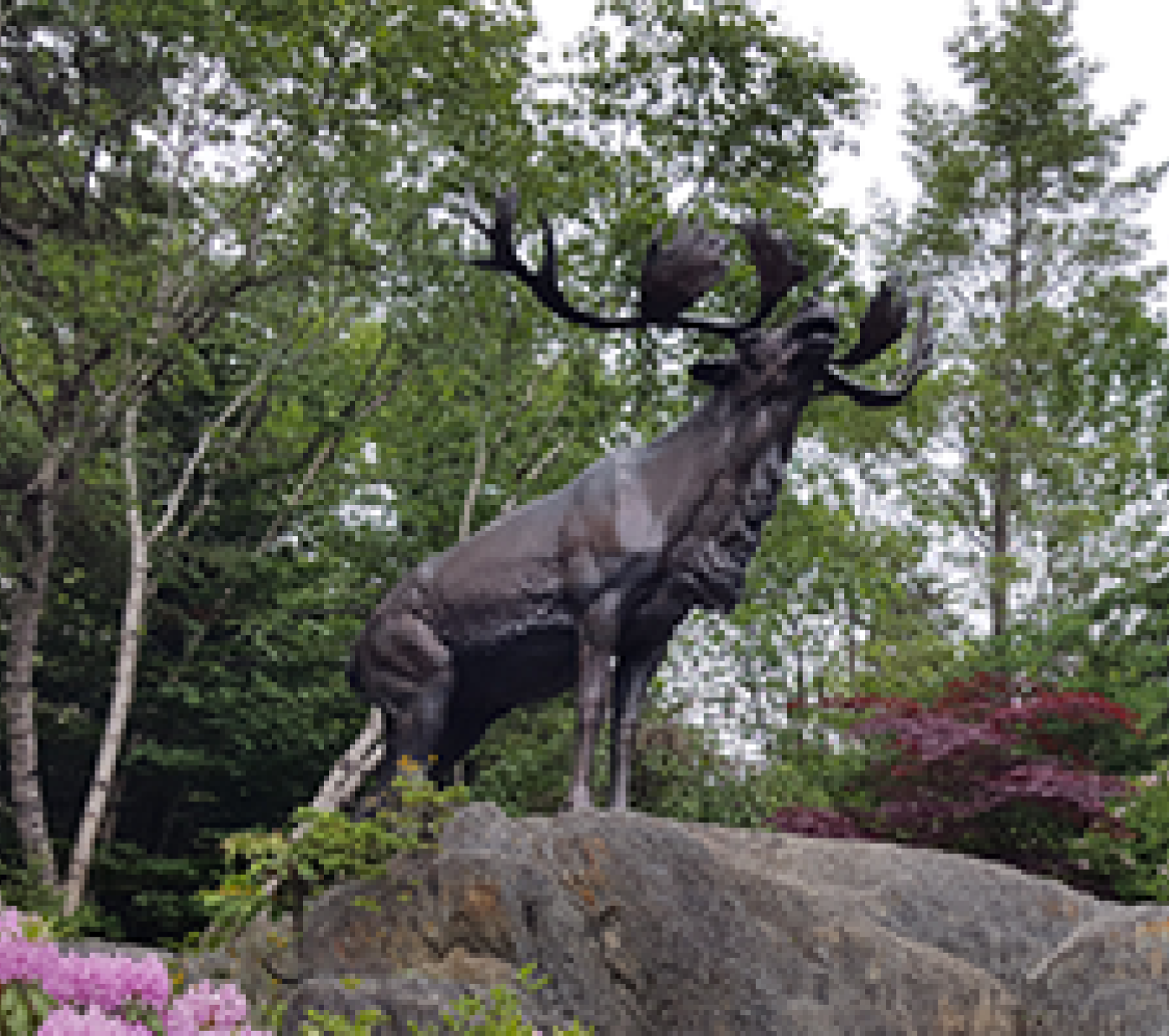
statue of a caribou
The Battle of Beaumont-Hamel

The Somme offensive had its origins in Anglo-French plans to bring hostilities to a rapid close. At the end of 1915, the war was going badly for the Allies. 

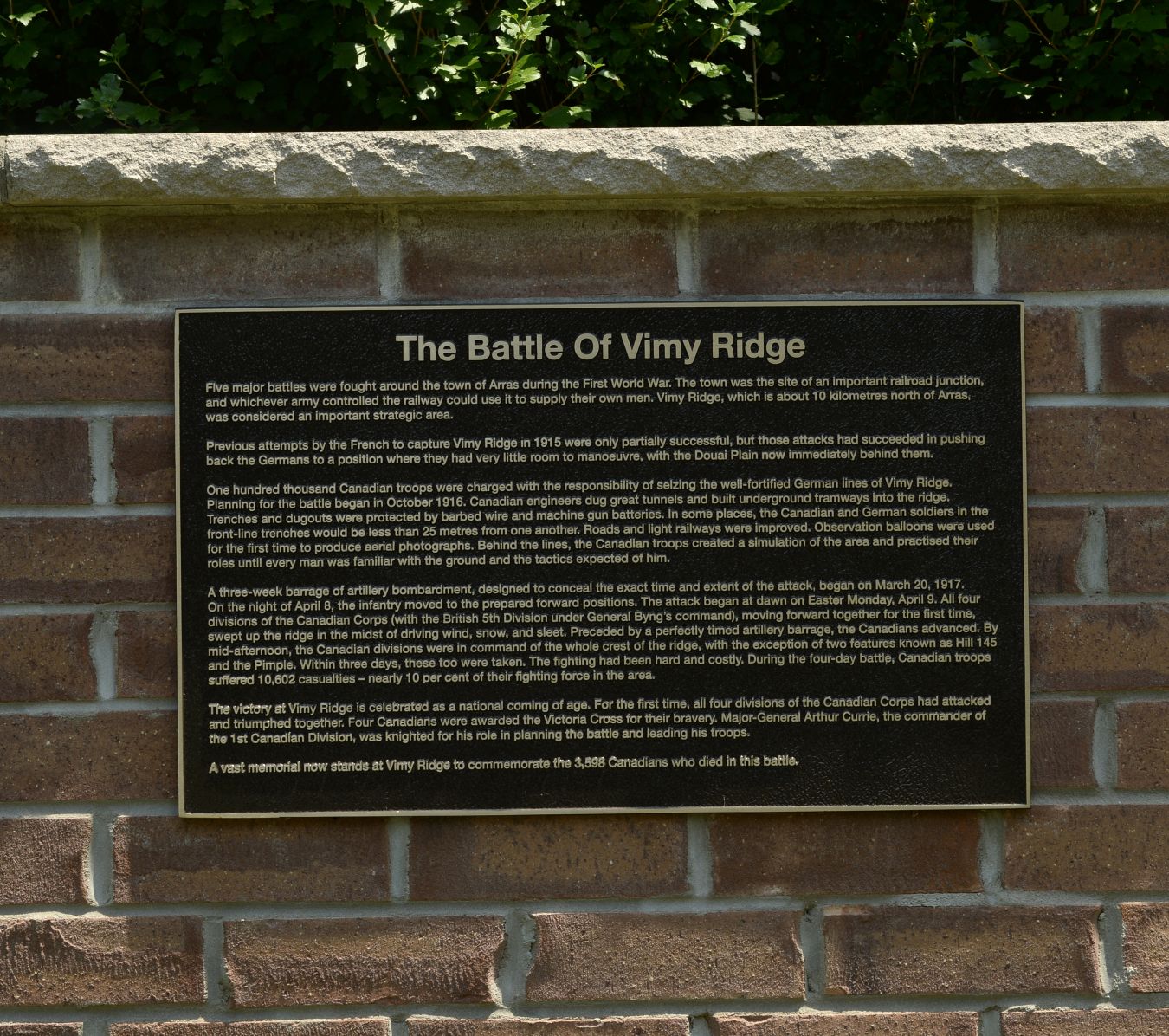
plaque of Vimy Ridge
The Battle of Vimy Ridge

Five major battles were fought around the town of Arras during the First World War. Vimy Ridge, which is about 10 kilometres north of Arras, was considered an important strategic area.

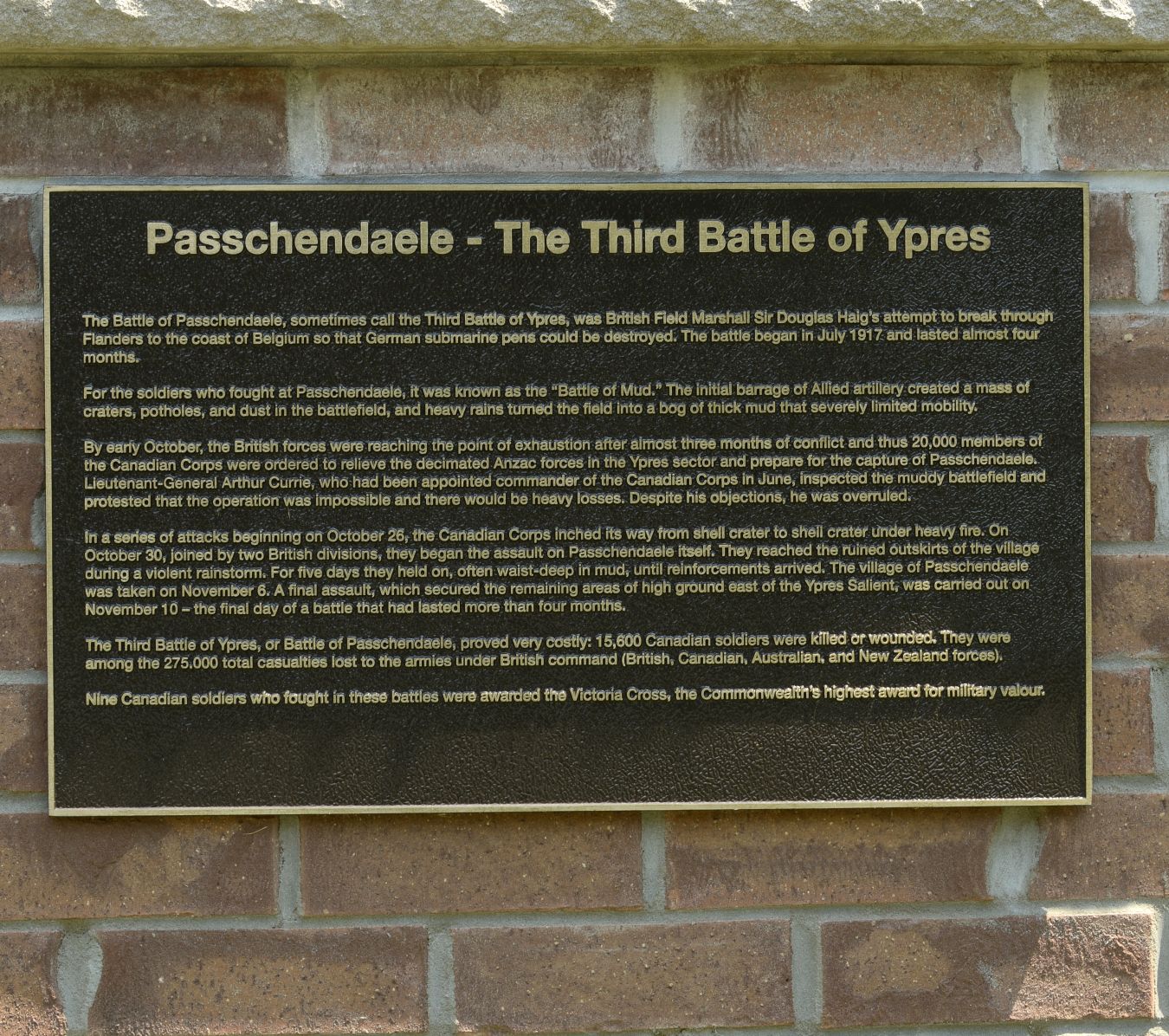
plaque of Passchendaele
Passchendaele

The Battle of Passchendaele was British Field Marshall Sir Douglas Haig’s attempt to break through Flanders to the coast of Belgium so that German submarine pens could be destroyed.

plaque of world war one map
Canada's Hundred Days

August 8 to November 11, 1918, became known as the “Hundred Days,” and for the Canadian Corps, it was in effect “Canada’s Hundred Days” as it was during this period that the corps was in the vanguard of the successful march to Mons.

World War I Commemorative Plaques with trees at Prospect
Canada's Nationhood

The armistice of November 11, 1918, brought relief to the whole world. The horrible struggle with death, destruction, and misery was at last halted. It had truly been a world war.

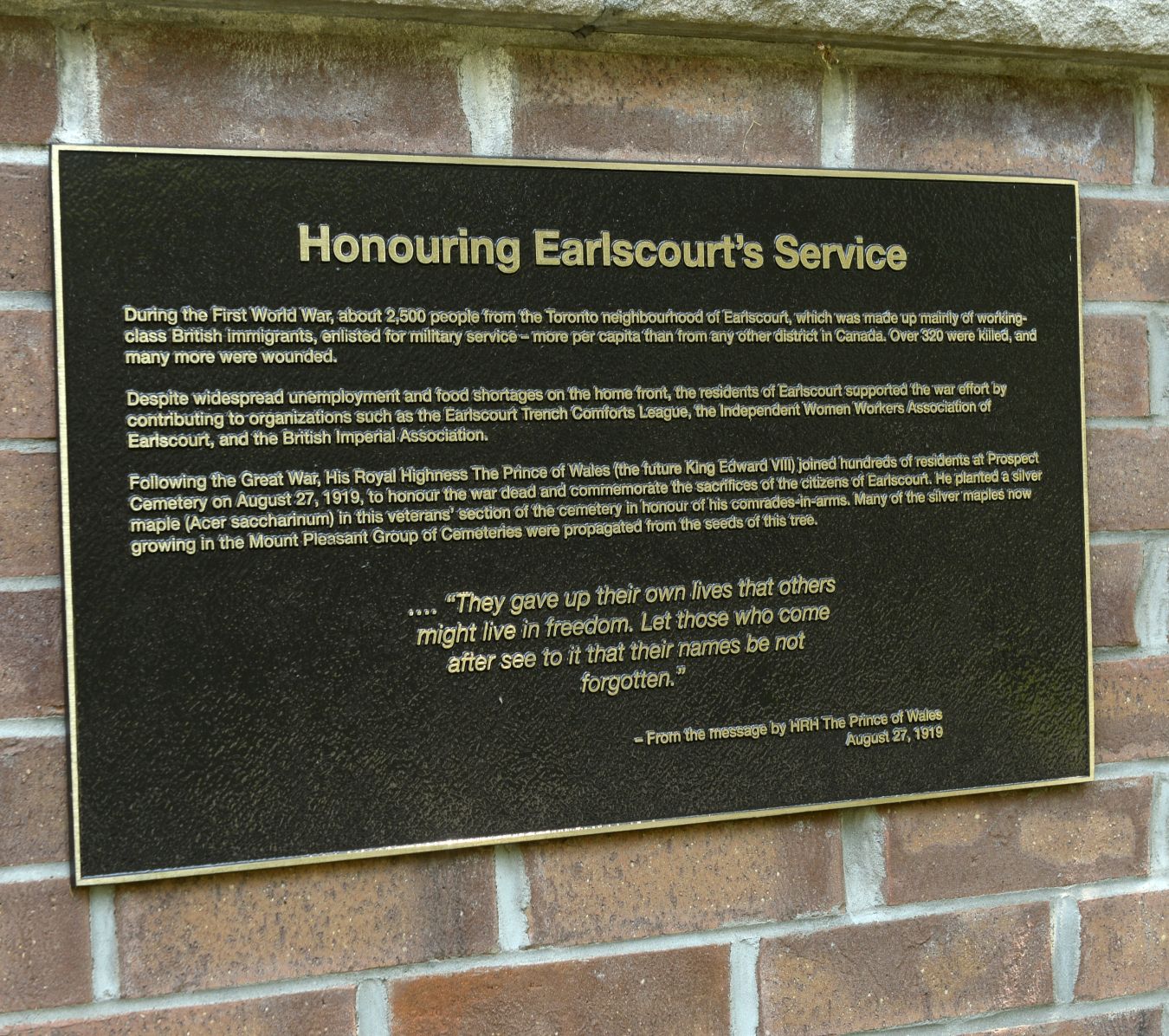
plaque honouring earlscourt's service
Honouring Earlscourt's Service

During WWI, about 2,500 people from the Toronto neighbourhood of Earlscourt, which was made up mainly of working-class British immigrants, enlisted for military service – more per capita than from any other district in Canada.